

Every season, club secretaries, coaches and athletic directors face the same scramble: kits that arrive late, numbers that peel, sizes that do not match the roster, and reorders that never quite match the first batch. Working with the right custom team uniforms manufacturer solves most of those problems before they start. This guide covers the main sports, decoration methods, names and numbers, fabrics, size runs, reorders and how to plan your timeline so uniforms are ready before the first game.
What a Custom Team Uniforms Manufacturer Handles
A full-service custom team uniforms manufacturer takes care of patterns, fabric, decoration, names and numbers, packing by player and shipping. That matters because a uniform order is not one product; it is a roster of individual garments that all need to be correct.
Pexton Apparel has been making sportswear in Sialkot, Pakistan since 2010. We produce uniforms for soccer, basketball, baseball, American football, rugby, cricket, volleyball and ice hockey, with sublimation, screen print, embroidery and custom labels. Orders ship DDP door-to-door to the USA, UK and most of Europe, so clubs do not have to deal with customs paperwork.
Uniforms by Sport: What Changes
Each sport has its own cut, fabric and decoration conventions:
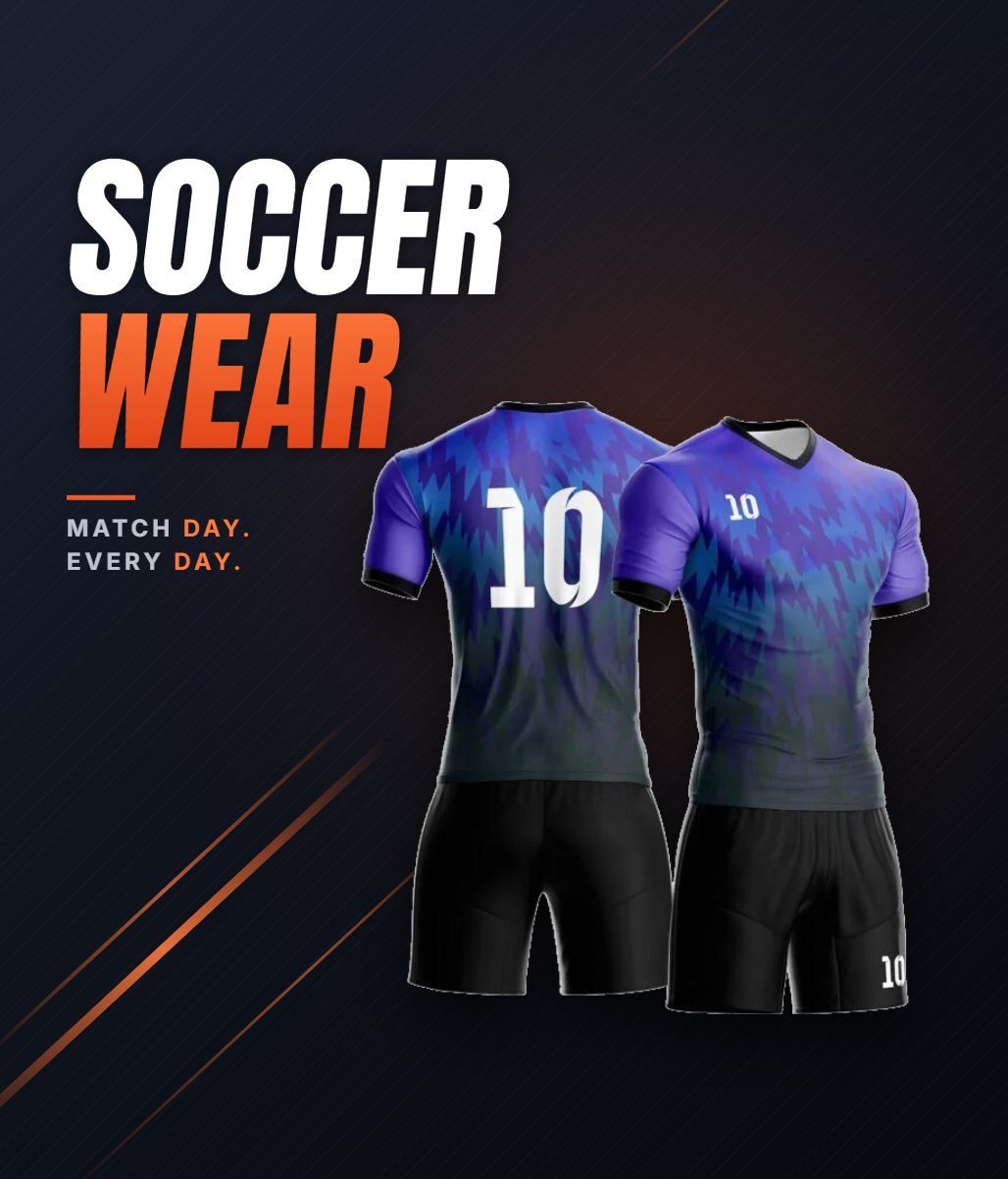
- Soccer: lightweight jerseys, shorts and socks. Full sublimation is the norm, allowing bold patterns and sponsor logos. See our soccer wear.
- Basketball: sleeveless jerseys and longer shorts, usually in mesh or lightweight polyester with sublimated or twill numbers. Browse basketball uniforms.
- Baseball: button-front or pullover jerseys and pants. Tackle twill lettering gives the classic look. See baseball uniforms.
- American football: stretch jerseys built to fit over pads, with reinforced shoulders and durable numbers.
- Rugby: heavier, tighter-fitting jerseys designed to withstand grabbing and tackling, with reinforced seams.
- Volleyball: fitted jerseys and shorts with stretch for jumping and diving, often fully sublimated.
- Ice hockey: oversized jerseys that fit over pads, with fight straps, reinforced elbows and large back numbers. See our ice hockey clothing.
Tell your custom team uniforms manufacturer the sport, age group and level of play, because a youth recreational kit and a senior competition kit need different fabric and construction choices.
Sublimation vs Tackle Twill vs Screen Print
Decoration is where uniforms get their identity, and the method you choose affects durability, weight and how easily you can add players later. Ask your custom team uniforms manufacturer to show printed examples of each. The three main methods compare like this:
| Method | Look and feel | Best for | Watch out for |
|---|---|---|---|
| Sublimation | Dye inside the fabric; no added weight or texture | Soccer, volleyball, rugby, basketball; complex designs, many colors | Needs polyester fabric; light base works best |
| Tackle twill | Cut fabric letters stitched on; raised, classic | Baseball, hockey, football, retro basketball | Heavier, more stitching time |
| Screen print | Ink layer on top of the fabric | Simple one or two color numbers, warm-up tees | Can crack on stretchy fabric if poorly cured |
Sublimation has become the most popular choice for many sports because there is no extra layer to peel or crack and there are no color limits. Tackle twill remains the premium, traditional option for baseball and hockey. Many teams mix methods, for example a sublimated body with twill numbers. For a deeper look at fabrics, artwork and care, read our sublimated sportswear guide.
Ready to order custom team uniforms?
MOQ from 30 pieces · samples in 8–10 days · DDP shipping to the USA, UK & Europe.
Names, Numbers and the Roster Sheet
Getting names and numbers right is the most error-prone part of any uniform order. A few habits prevent mistakes:
- Use one roster spreadsheet with columns for player name, number, jersey size, short size and any extras.
- Check spelling twice, especially for names with accents, hyphens or apostrophes.
- Agree on font and placement early: back number height, front number, sleeve numbers and name bar position.
- Check league rules for number size, contrast and placement. Many leagues have specific requirements.
- Add spares for new players who join mid-season.
Your custom team uniforms manufacturer should send back a proof showing each name and number before production, and pack each player’s set together so distribution is easy.
Fabrics: Interlock, Mesh and Moisture-Wicking Polyester
Most modern uniforms are made from polyester because it is light, durable, quick-drying and takes sublimation well. Common options:
- Polyester interlock: smooth, stable and slightly heavier. Good for soccer, rugby and volleyball jerseys.
- Mesh: open structure for airflow, common in basketball, hockey and practice jerseys.
- Moisture-wicking knits: engineered to pull sweat away from the skin, ideal for hot climates and high-intensity sports.
- Stretch blends: polyester with spandex for fitted styles like volleyball and compression base layers.
Fabric weight varies by sport. As a typical guide, lightweight jerseys often sit around 120–160 GSM, while heavier rugby or hockey fabrics run higher. Request fabric swatches so coaches can feel the options before deciding.
Size Runs for Clubs and Schools
Sizing is where many clubs lose money, ordering too many mediums and not enough youth sizes. Tips that help:
- Collect sizes from players or parents with a simple form, and share a measurement chart so they choose correctly. Our size charts give a good starting point.
- Offer youth and adult size runs, and women’s cuts where needed.
- Order a few extra pieces in the most common sizes to cover late sign-ups.
- Keep the size chart the same across seasons so families know what to order.
Our MOQ starts from 30 pieces per design, and sizes can be mixed within the design, so a single squad can order youth and adult sizes together.
Reorders and Consistency
Teams grow and kits get lost. When you reorder, the new pieces should match the originals in color, fabric and fit. Keep a record of the approved sample, fabric reference, color codes and fonts. A reliable custom team uniforms manufacturer keeps your artwork and specs on file, which makes repeat orders faster and keeps colors consistent. Sublimation also helps here, since digital files reproduce designs exactly.
Timeline Planning Before the Season
Late uniforms are almost always a planning problem. Work backward from your first game:
- Design and quote: finalize the design, colors and decoration method.
- Sample: standard samples take about 8–10 days. Check fit, color and number placement.
- Roster and sizes: collect sizes while the sample is being made.
- Bulk production: starts after sample approval and final roster.
- Shipping: DDP delivery to your door. Allow buffer time for transit.
Start talking to your custom team uniforms manufacturer several weeks before the season, especially for large club orders or complex designs.
How to Choose a Custom Team Uniforms Manufacturer
Price per kit matters, but it is rarely what causes problems on game day. Before you commit to a custom team uniforms manufacturer, check the following:
- Range of sports: can they make every kit your club needs, from match jerseys to warm-ups and training wear?
- Decoration in one place: sublimation, twill, screen print and embroidery handled together keeps colors and logos consistent.
- Proofing: do they send a design proof and a names-and-numbers proof before production?
- Sampling: will they make a physical sample so you can check fit and color?
- Shipping terms: DDP delivery avoids unexpected duties when the boxes arrive.
Common mistakes to avoid
- Collecting sizes after production starts, which forces rushed guesses.
- Approving dark sublimated designs on screen without seeing a printed sample.
- Ignoring league rules on number size and color contrast.
- Switching to a new custom team uniforms manufacturer mid-season, which makes matching reorders difficult.
Frequently Asked Questions
What is the minimum order for team uniforms?
Our MOQ starts from 30 pieces per design, with mixed sizes allowed.
Can you add individual names and numbers?
Yes. Send us a roster with names, numbers and sizes, and we add them with sublimation, tackle twill or screen print.
Should my custom team uniforms manufacturer use sublimation or tackle twill?
Sublimation suits complex, colorful designs and lightweight sports. Tackle twill gives a classic raised look for baseball, hockey and football.
How long does a uniform sample take?
Standard samples usually take 8–10 days.
Can I reorder extra jerseys later in the season?
Yes. As your custom team uniforms manufacturer, we keep your specs and artwork on file so reorders match the original kit.
Do you ship to the USA and UK?
Yes. We ship DDP door-to-door to the USA, UK and most of Europe, with worldwide shipping available.
Get Your Team Ready Before the First Whistle
Great team kits come from clear choices: the right fabric for the sport, the right decoration method, an accurate roster and a timeline that leaves room for sampling. A dependable custom team uniforms manufacturer will guide you through each step and keep reorders consistent season after season. Share your design ideas, team colors and roster, and we will help you get uniforms your players are proud to wear.
Ready to kit out your team for the season?
MOQ from 30 pieces · samples in 8–10 days · DDP shipping to the USA, UK & Europe.
Explore More From Pexton Apparel
Related Guides Clothing Manufacturers in Pakistan vs China vs Bangladesh Clothing Tech Pack Guide: Every Page Explained (+ Free Template) Low MOQ Clothing Manufacturer: How to Launch From 30 Pieces How to Find a Clothing Manufacturer: A Step-by-Step Guide for Brands
Product Categories Custom Soccer Uniforms Custom Basketball Uniforms Custom Esports Jerseys Custom Rugby Uniforms
Manufacturing for Your Market USA Clothing Manufacturer UK Clothing Manufacturer Ireland Clothing Manufacturer Europe Clothing Manufacturer Canada Clothing Manufacturer Australia Clothing Manufacturer New Zealand Clothing Manufacturer