

If you run a jiu-jitsu academy or are building a grappling brand, choosing a BJJ gi manufacturer is one of the most important decisions you will make. A gi takes more abuse than almost any other garment: grips, pulls, sweat, hot washes and hours on the mat every week. When the weave is weak or the shrinkage is uncontrolled, students notice fast. This guide explains weaves, fabric weights, competition rules, shrinkage, branding and sizing so you can order gis that hold up and represent your name well.
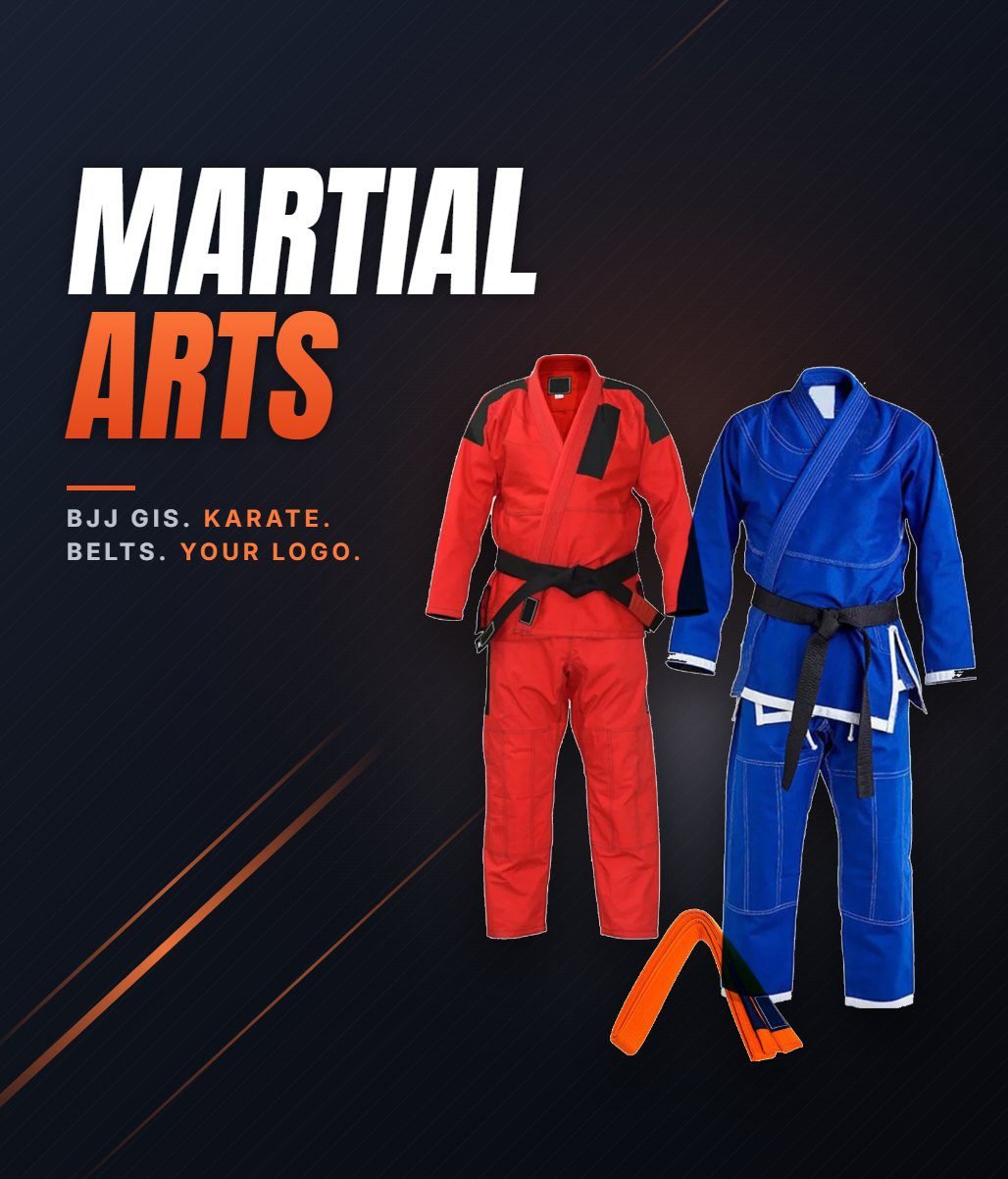
What to Expect From a BJJ Gi Manufacturer
A specialist BJJ gi manufacturer understands that a gi is not just a heavy cotton jacket. The collar, the reinforcement at stress points, the skirt length, the sleeve taper and the pant cut all affect how the gi performs in rolling and whether it passes a competition check.
At Pexton Apparel, we have manufactured in Sialkot, Pakistan since 2010, and our martial arts uniforms range includes BJJ gis, karate and taekwondo uniforms. We handle custom patterns, embroidery, patches, labels and packaging, so an academy or brand can launch a gi that is fully its own. If you plan to sell under your own label, our private label service covers branded tags, labels and bags.
Weave Types: Pearl, Gold and Ripstop
The weave determines how a gi jacket feels, how heavy it is and how hard it is to grip, so it is usually the first question a BJJ gi manufacturer will ask you. Here are the most common options:
- Pearl weave: the most popular modern choice. It is relatively light, breathable and strong for its weight, which makes it a good all-rounder for training and competition.
- Gold weave: a thicker, more textured weave that sits between single and double weave. It is durable and harder to grip, but heavier and slower to dry.
- Single and double weave: traditional constructions. Single weave is light; double weave is very heavy and durable but bulky and hot.
- Ripstop pants: most BJJ pants use cotton ripstop or canvas twill. Ripstop has a grid pattern that stops small tears from spreading, while staying lighter than canvas.
Some brands also use lightweight ripstop jackets for travel or hot climates. Before you pick, check the current rules of any federation your students compete in, because not every fabric is accepted for every event.
| Weave | Feel | Typical jacket GSM | Best for |
|---|---|---|---|
| Pearl weave | Light, smooth, breathable | 350–550 | Everyday training, competition |
| Gold weave | Thick, textured | 550–750 | Durability, harder to grip |
| Single weave | Light, soft | 350–450 | Hot climates, beginners |
| Double weave | Very heavy, stiff | 750+ | Maximum durability |
Fabric Weight and GSM for Gi Jackets
Gi jackets are usually described by GSM (grams per square meter). The ranges above are typical industry figures, not fixed rules. In practice, many academies settle on a pearl weave jacket in the mid range, because it balances durability with comfort for long sessions. Very light jackets suit hot gyms and competitors cutting weight. Heavier jackets last longer but feel warmer and take longer to dry.
Pants matter just as much. Look for a reinforced knee panel, a gusset in the crotch for movement, and enough belt loops to keep a rope or elastic drawstring in place. Ask your BJJ gi manufacturer to confirm the pant fabric weight and whether the knees are double-layered.
Ready to start your BJJ gi line?
MOQ from 30 pieces · samples in 8–10 days · DDP shipping to the USA, UK & Europe.
IBJJF-Legal Gis: What Generally Matters
If your students compete, their gis need to pass inspection. Rules can change, so always check the latest IBJJF uniform rules before approving a design. In general terms, competition gis are expected to meet requirements like these:
- Colors: solid white, royal blue or black, with jacket and pants in the same color. Mixed colors or camo are not allowed in IBJJF events.
- Sleeve fit: sleeves must reach close to the wrist when the arms are extended, and there are limits on how wide the sleeve opening can be.
- Jacket length: the skirt of the jacket should reach roughly the thighs.
- Pant length: pants should reach close to the ankle, without being cut too short or too tight.
- Collar: the lapel has thickness and width limits, and it must not be too stiff.
- Patches: patches are allowed only in certain areas and must be made of cotton-style material and sewn on properly.
A reliable BJJ gi manufacturer builds patterns with these limits in mind, but you should still share the federation you are targeting so placements and measurements can be checked during sampling.
Shrinkage and Pre-Shrunk Fabric
Shrinkage is the number one complaint about gis. Cotton weaves can shrink noticeably in hot washes and dryers, especially in sleeve and pant length. There are two ways to manage this:
- Pre-shrunk fabric: the fabric is washed or treated before cutting, so the finished gi changes much less after the first washes.
- Shrinkage allowance: patterns are cut slightly larger to allow for expected shrinkage. This works, but customers must follow the care instructions.
Ask your BJJ gi manufacturer which approach they use and request a wash test on the sample. Measure before and after so you know exactly what your students will experience. Clear care labels (“cold wash, hang dry”) also reduce returns.
Embroidery, Patches and Branding
Branding is what turns a plain uniform into an academy gi, and it is where a capable BJJ gi manufacturer can add real value. Common options include:
- Embroidery: logos on the lapel, shoulder, back or pant leg. Embroidery on heavy weaves needs the right backing and stitch density so it stays flat.
- Woven or embroidered patches: sewn onto the shoulders, back or legs. Patches are useful if you want a standard gi with interchangeable branding.
- Collar and lapel details: a contrast lapel color, printed or embroidered text on the inner collar, or a branded rank bar on the jacket.
- Inner lining print and labels: sublimated inner yoke lining, custom size labels and hang tags.
Keep in mind that competition rules limit where patches and logos can go, so plan artwork placement before sampling.
A0–A5 Sizing and Belts
Adult gis are usually sized A0 through A5, with variations such as A1L (long) or A2F (fuller cut) offered by some brands. Kids’ gis use their own size run, often labeled M000 to M4 or similar. Since every brand’s chart is slightly different, give your BJJ gi manufacturer clear height and weight ranges for each size. You can find our reference measurements on the size charts page, and we can adjust them to match your existing chart.
Belts complete the program. Many academies order gis and ranked belts together so the branding and colors match. Our BJJ belts can be made in standard rank colors with custom embroidery or woven labels.
Sampling, MOQ and Choosing a BJJ Gi Manufacturer
Our MOQ starts from 30 pieces per design, and sizes can be mixed, which suits academies that need a spread from A0 to A4. Samples with standard customization take around 8–10 days. Use the sample to check fit, collar stiffness, stitching at stress points and shrinkage after washing.
When comparing suppliers, use this checklist:
- Do they offer pearl, gold and ripstop options and state the GSM?
- Is the fabric pre-shrunk, and what shrinkage should you expect?
- Are stress points reinforced (armpits, skirt slits, knees, crotch)?
- Can they follow competition placement rules for patches?
- Do they have a clear inspection process? Read our quality assurance approach.
- Can they help with a tech pack if you do not have one?
Mistakes to Avoid
- Approving a gi without a wash test, then facing shrinkage complaints.
- Choosing the heaviest weave for a hot gym.
- Placing patches where competition rules do not allow them.
- Ordering one size run without checking your students’ actual height and weight spread.
- Picking a BJJ gi manufacturer based only on photos instead of a physical sample.
Popular products: wholesale BJJ gi, competition BJJ gi, BJJ belts.
Frequently Asked Questions
What is the minimum order for custom BJJ gis?
Our MOQ starts from 30 pieces per design, and you can mix sizes within that quantity.
Which weave should I ask my BJJ gi manufacturer for?
Pearl weave is the most common choice because it balances weight, comfort and durability. Gold weave suits students who want a tougher, harder-to-grip jacket.
Are your gis IBJJF legal?
We can build gis to general IBJJF requirements for color, fit and patch placement. Rules change, so please check the current IBJJF uniform rules and share them with us during sampling.
Will the gi shrink?
Cotton gis can shrink. Pre-shrunk fabric and cold wash, hang dry care keep shrinkage to a minimum. We recommend a wash test on the sample.
How long do samples take?
Standard samples take about 8–10 days. Heavy embellishment or complex branding can take longer.
Can you make matching belts?
Yes. We make BJJ belts in rank colors with custom embroidery or labels to match your gis.
Build a Gi Your Students Are Proud to Wear
A good gi starts with the right weave and weight, controlled shrinkage, smart branding and a fit that passes competition checks. Working with an experienced BJJ gi manufacturer means those details are planned and sampled before bulk production. Share your logo, preferred weave and size spread, and we will help you put together a gi and belt program that fits your academy or brand.
Ready to order custom BJJ gis for your academy?
MOQ from 30 pieces · samples in 8–10 days · DDP shipping to the USA, UK & Europe.
Related: add matching no-gi gear from our rash guard manufacturer page, or explore karate, taekwondo and judo uniforms on our custom martial arts uniforms hub.
Explore More From Pexton Apparel
Related Guides MMA Clothing Manufacturer Guide: Shorts, Rash Guards & Merch Clothing Manufacturers in Pakistan vs China vs Bangladesh Clothing Tech Pack Guide: Every Page Explained (+ Free Template) Low MOQ Clothing Manufacturer: How to Launch From 30 Pieces
Product Categories Custom Martial Arts Uniforms MMA Fight Shorts Custom Rash Guards Karate & Taekwondo Uniforms
Manufacturing for Your Market USA Clothing Manufacturer UK Clothing Manufacturer Ireland Clothing Manufacturer Europe Clothing Manufacturer Canada Clothing Manufacturer Australia Clothing Manufacturer New Zealand Clothing Manufacturer